
Looking for new approaches to support your mental or physical health?
Biofeedback and neurofeedback offer promising approaches to improving how the brain and body regulate themselves.
A Different Way Forward
For a long time, mental healthcare has largely traveled in two lanes: therapy and medication. Both can be incredibly valuable—but what happens when you still feel stuck? Maybe therapy has helped, but you have not made the progress you hoped for. Maybe medication is not something you want to pursue, or it has not given you the results you were looking for. Or maybe you simply have the sense that there has to be another way to understand what is happening.
Neurofeedback and biofeedback offer a third lane. Rather than focusing only on symptoms, thoughts, or diagnoses, these approaches bring the neuroscience and physiology of regulation into the conversation. They give us new ways to understand patterns in the brain and body—and new opportunities to train those systems toward healthier, more flexible functioning.
For many people, that feels genuinely different. It is an opportunity to explore mental health from another angle: to learn more about how your nervous system is functioning, to actively participate in the training process, and to discover options you may not have known existed.
If you are curious about what your body and brain are already telling you, or simply ready to explore something new, neurofeedback and biofeedback may be worth discovering.
train your brain, calm your body
Discover how biofeedback and neurofeedback help people build lasting self-regulation skills.
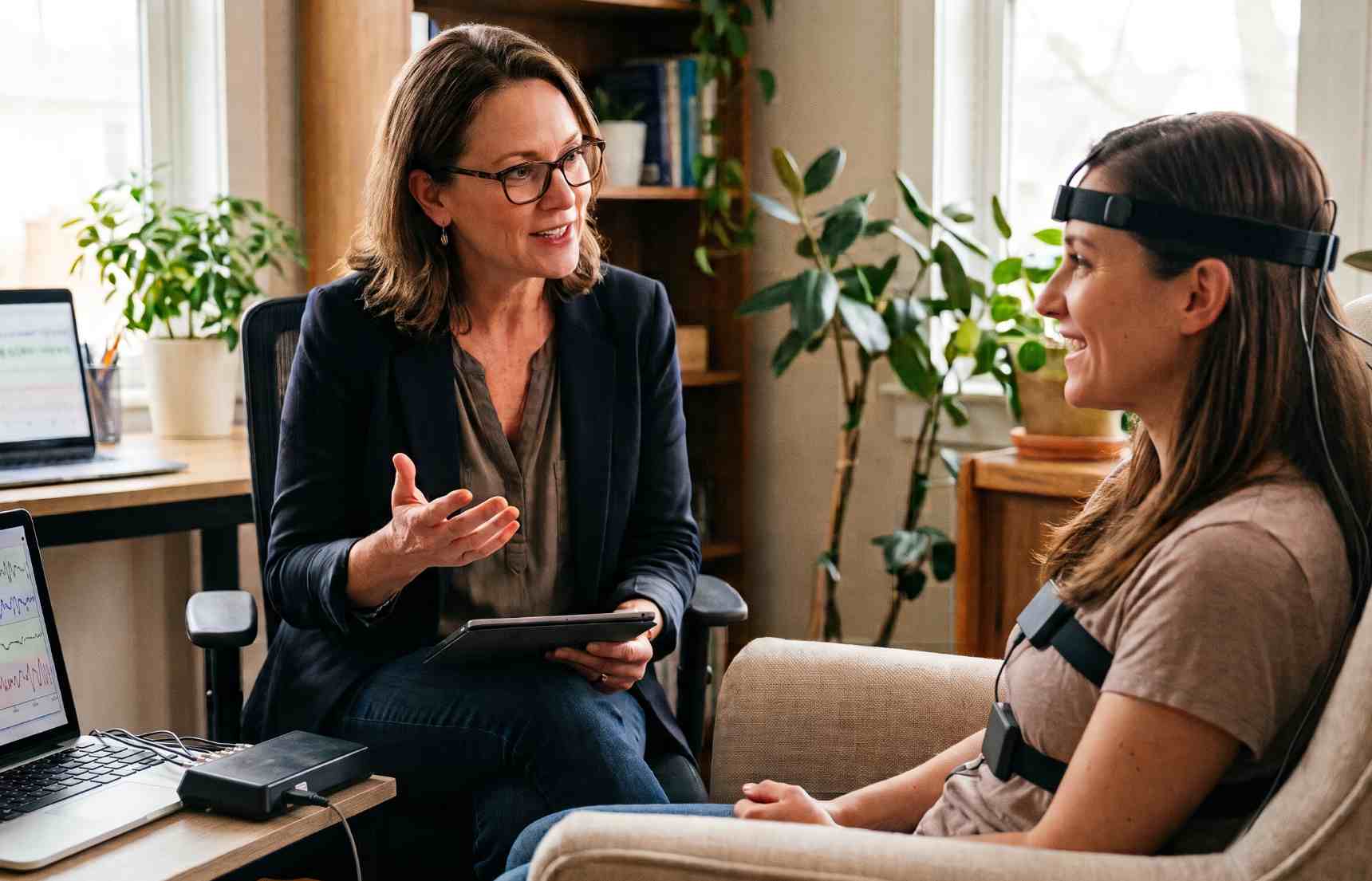
What is Neurofeedback?
Neurofeedback is like a mirror for your brain. Sensors on your scalp read your brainwaves, and a computer shows you what your brain is doing as it happens, usually through a movie, game, or sound. When your brain moves toward a calmer or more focused pattern, the movie plays more smoothly or the sound gets clearer. Over time, your brain learns to find those patterns on its own.
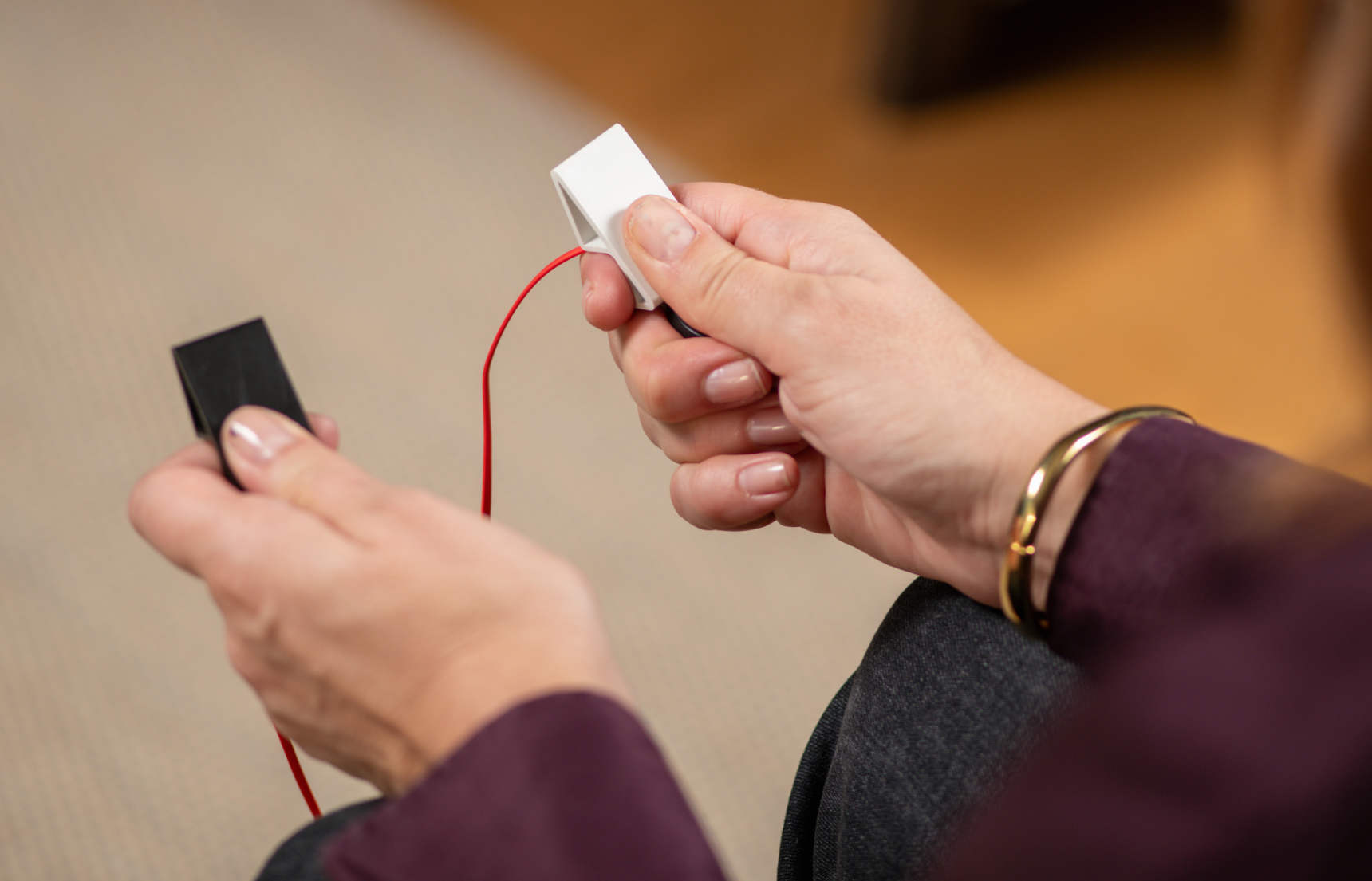
What is Biofeedback?
Biofeedback is like a mirror for your body. Small sensors on your fingers, chest, or skin read signals such as your heart rate, breathing, muscle tension, and skin temperature, and a computer shows you what your body is doing as it happens, usually through graphs, images, or sounds. As you practice slower breathing or relaxing tense muscles, you can watch your body respond right away. Over time, you learn to find that calmer state on your own, even without the equipment.
Recommended Reading & Resources
Join a global community of biofeedback and neurofeedback professionals dedicated to scientific excellence and clinical success.

Healthy Brain Happy Body Podcast
Expert insights into the brain-body connection.
Join host Dr. Saul Rosenthal as he interviews world-renowned leaders in psychophysiology, neurobiology, and clinical biofeedback.

Recommended Reading
A curated bibliography for practitioners.
Whether you are studying for BCIA certification or looking for the latest research, explore our vetted list of foundational texts and journals.
Find a credible provider
Helping the public find good, credible clinicians across the Northeast region and beyond.